
Printable study sheets
Bass arpeggios and fretboard notes
The arpeggio sheets use E-A-D-G tuning. The root note is highlighted in amber, and the fretboard chart names every note from the open strings through fret 12.
Printable sheets
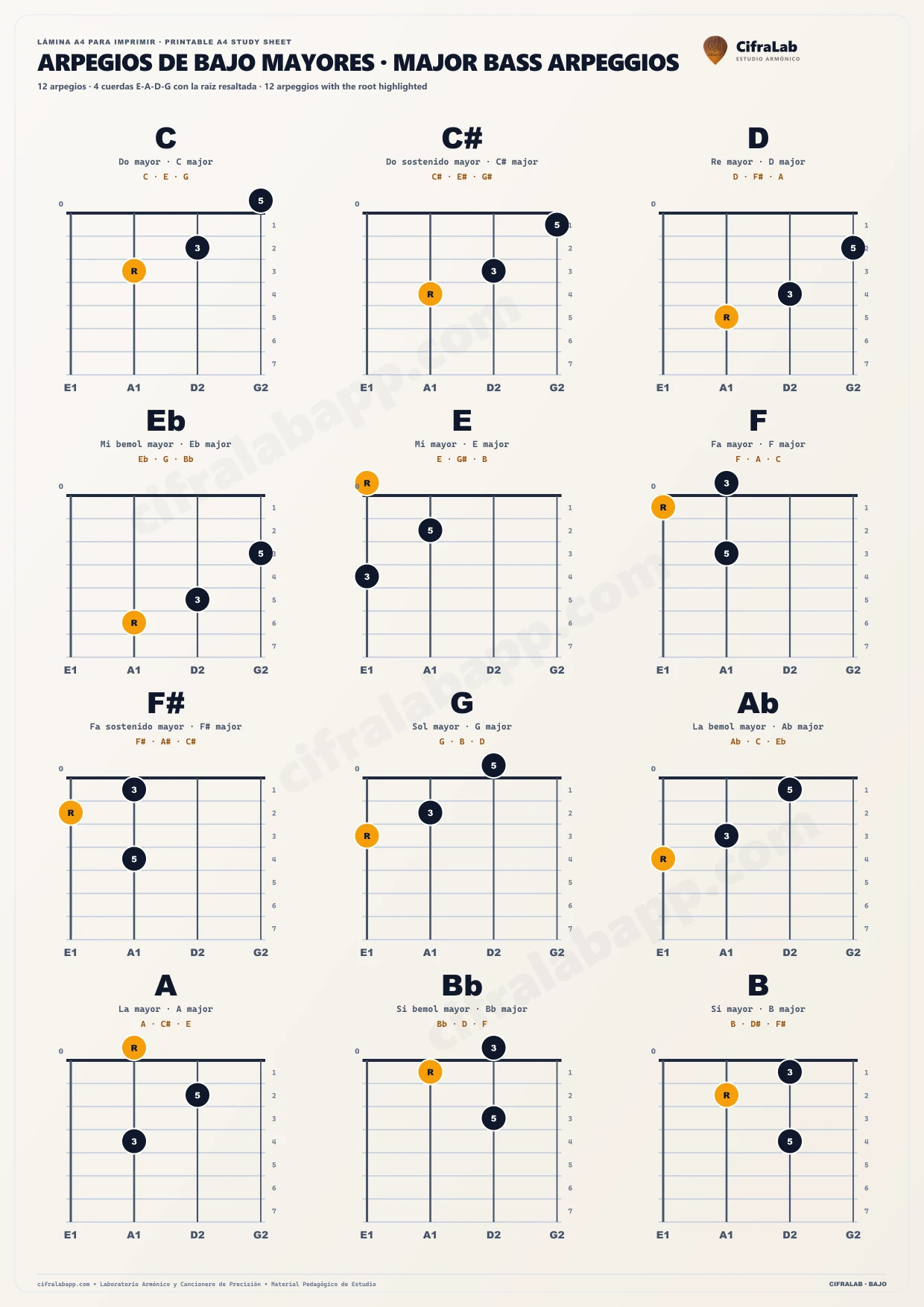
Major bass arpeggios
12 arpeggios across four strings. The root note is highlighted in amber.
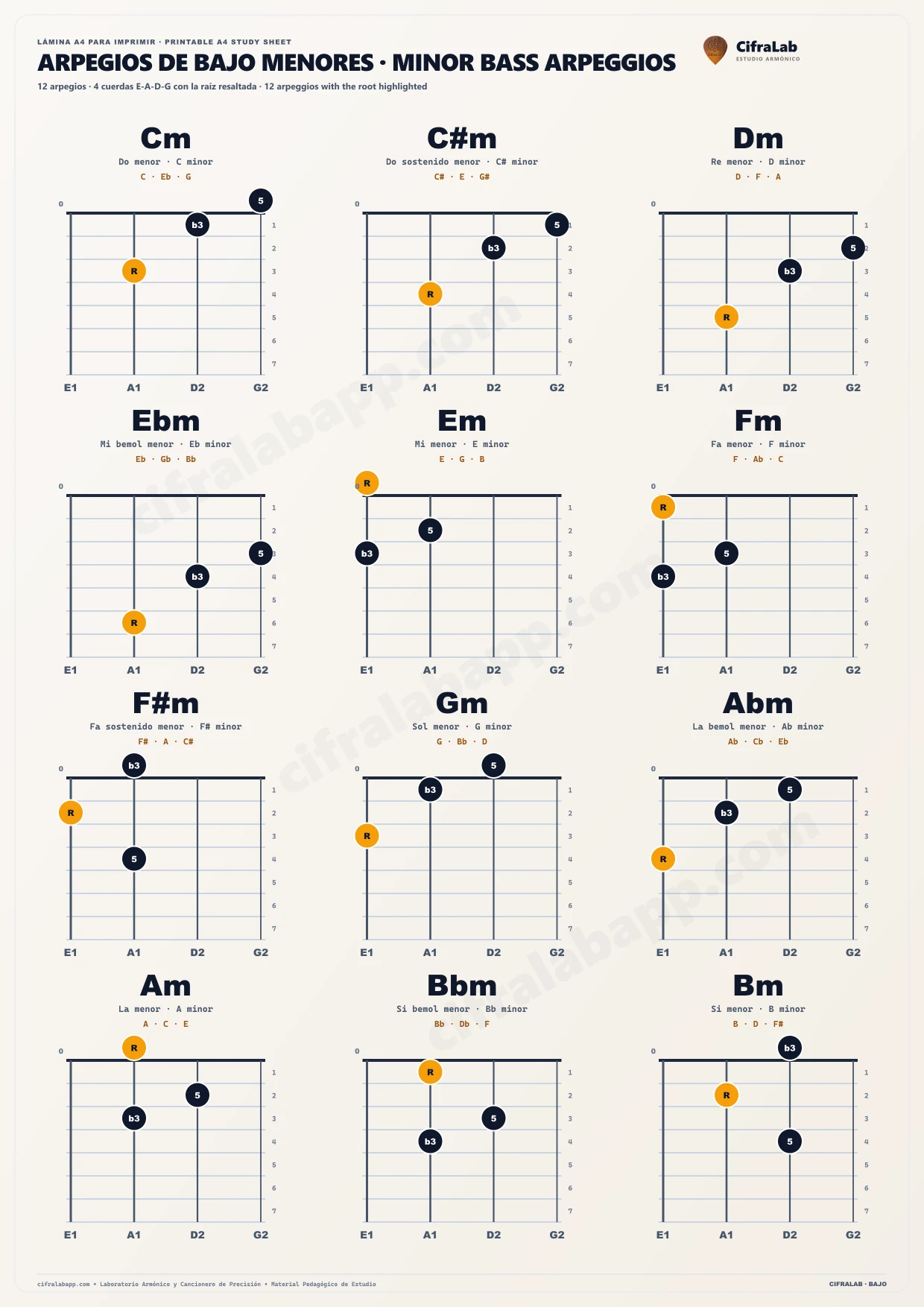
Minor bass arpeggios
12 minor arpeggios across four strings. The root note is highlighted in amber.
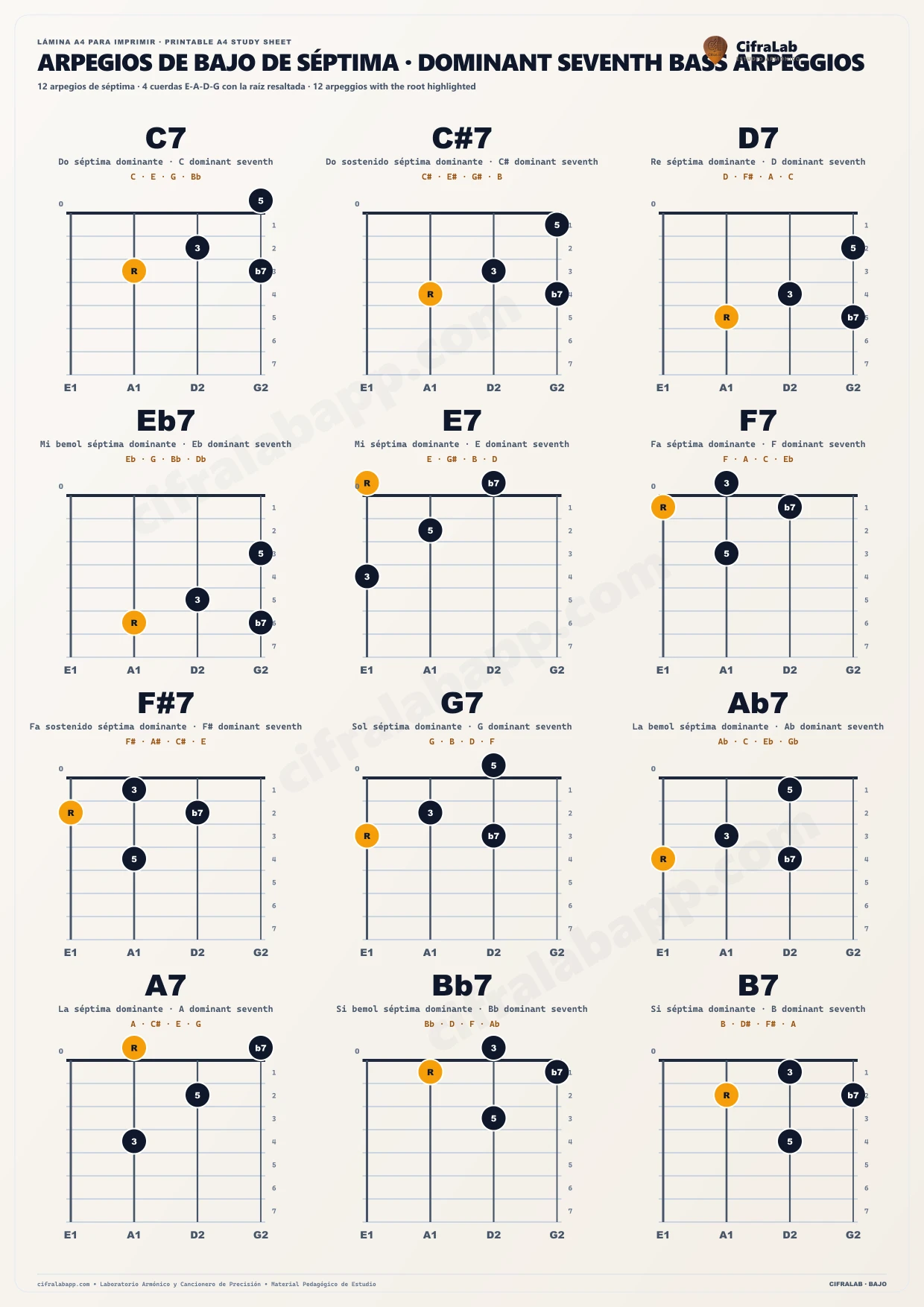
Bass dominant seventh arpeggios
12 dominant seventh arpeggios across four strings. The root is highlighted in amber.
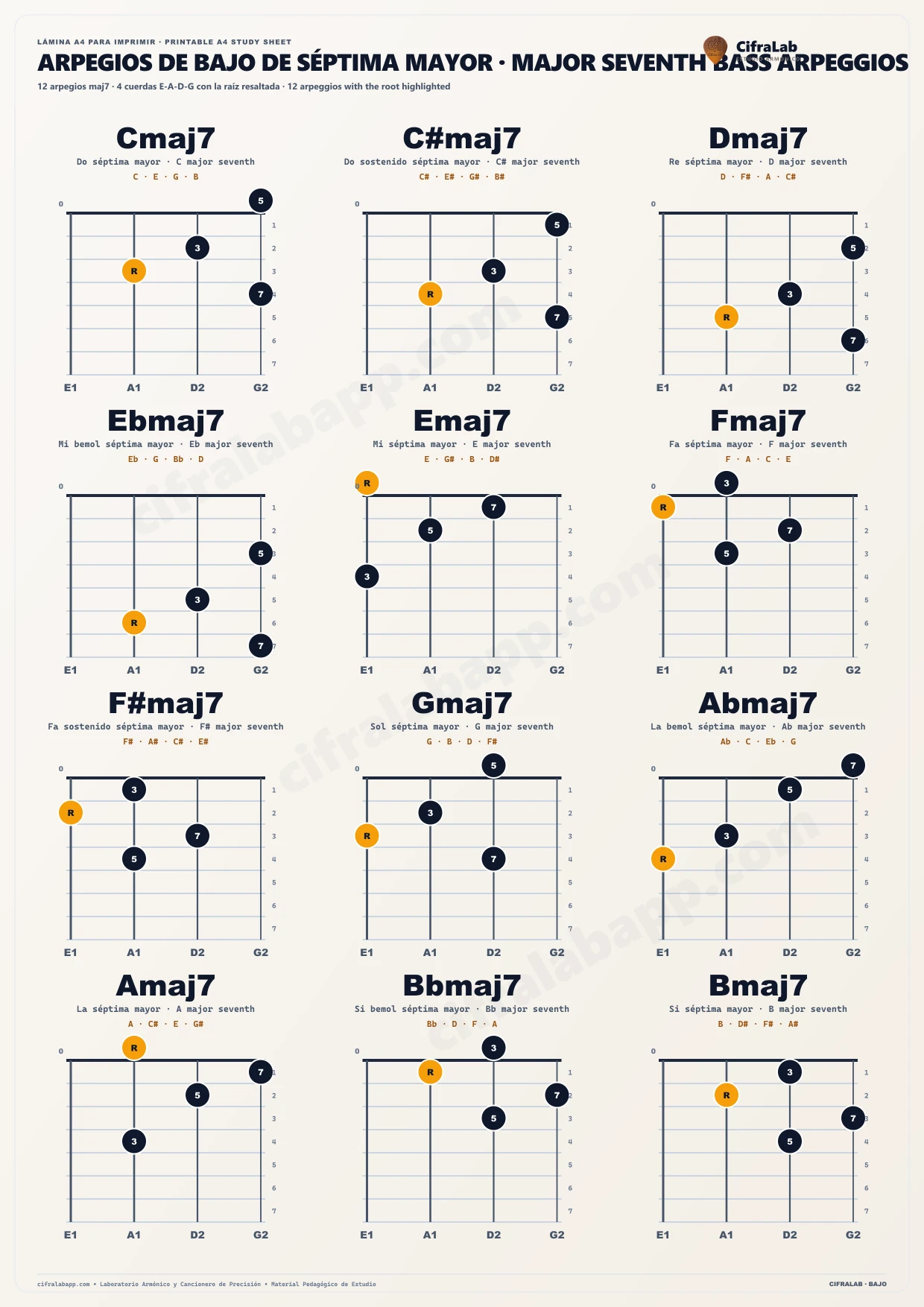
Bass major seventh arpeggios
12 major seventh arpeggios across four strings. The root is highlighted in amber.
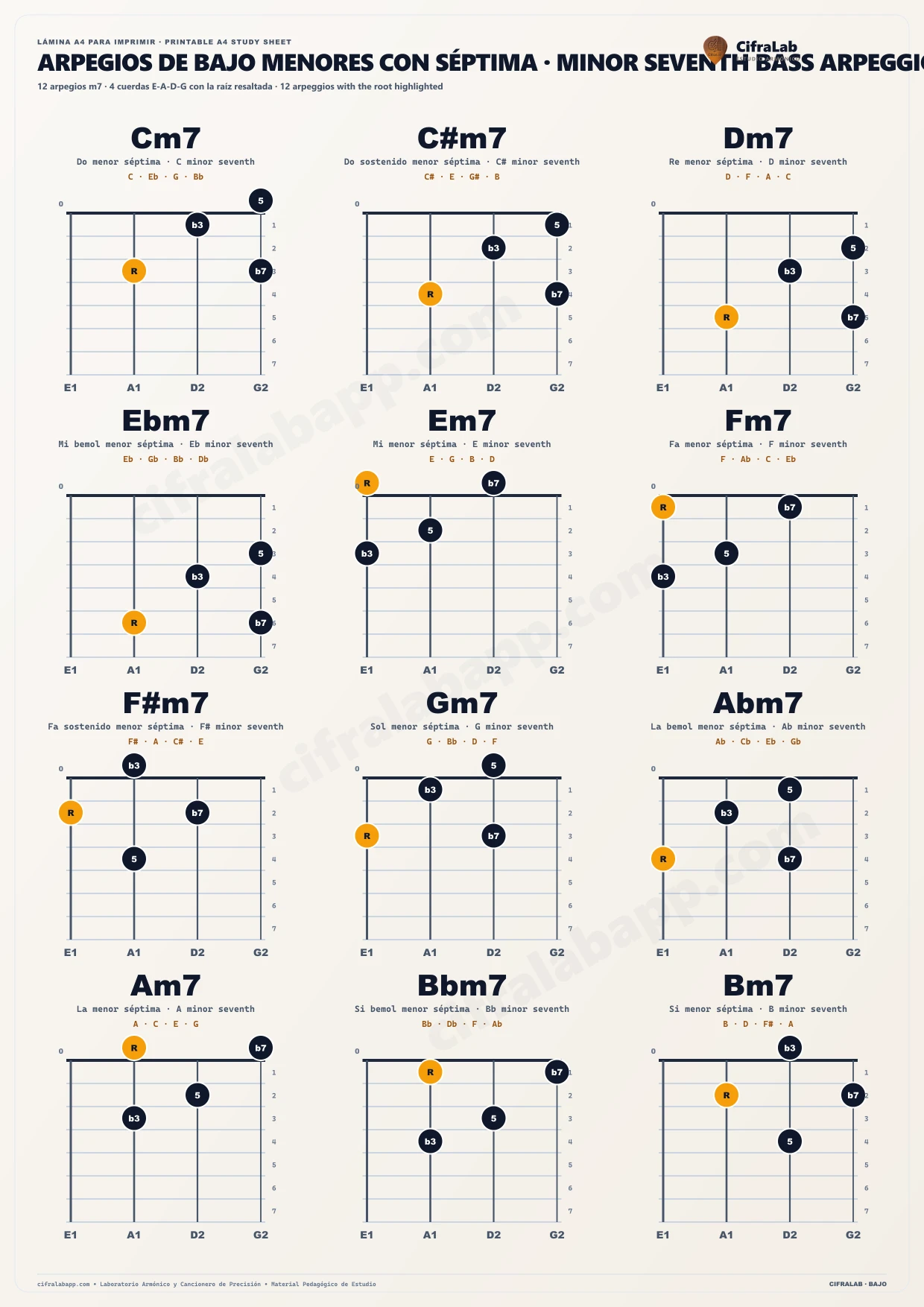
Bass minor seventh arpeggios
12 minor seventh arpeggios across four strings. The root is highlighted in amber.
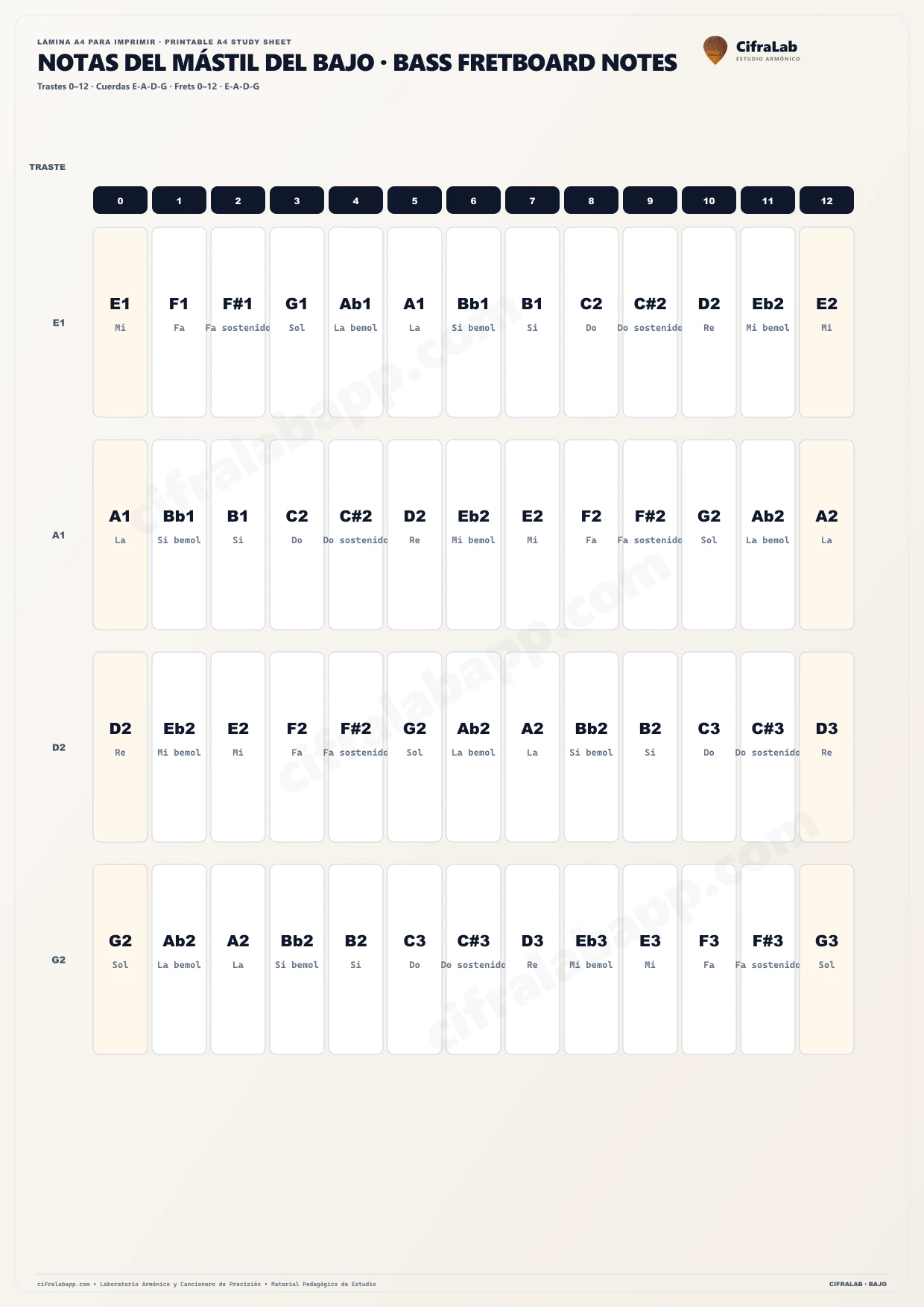
Bass fretboard notes
Notes on E-A-D-G strings from the open string through fret 12.
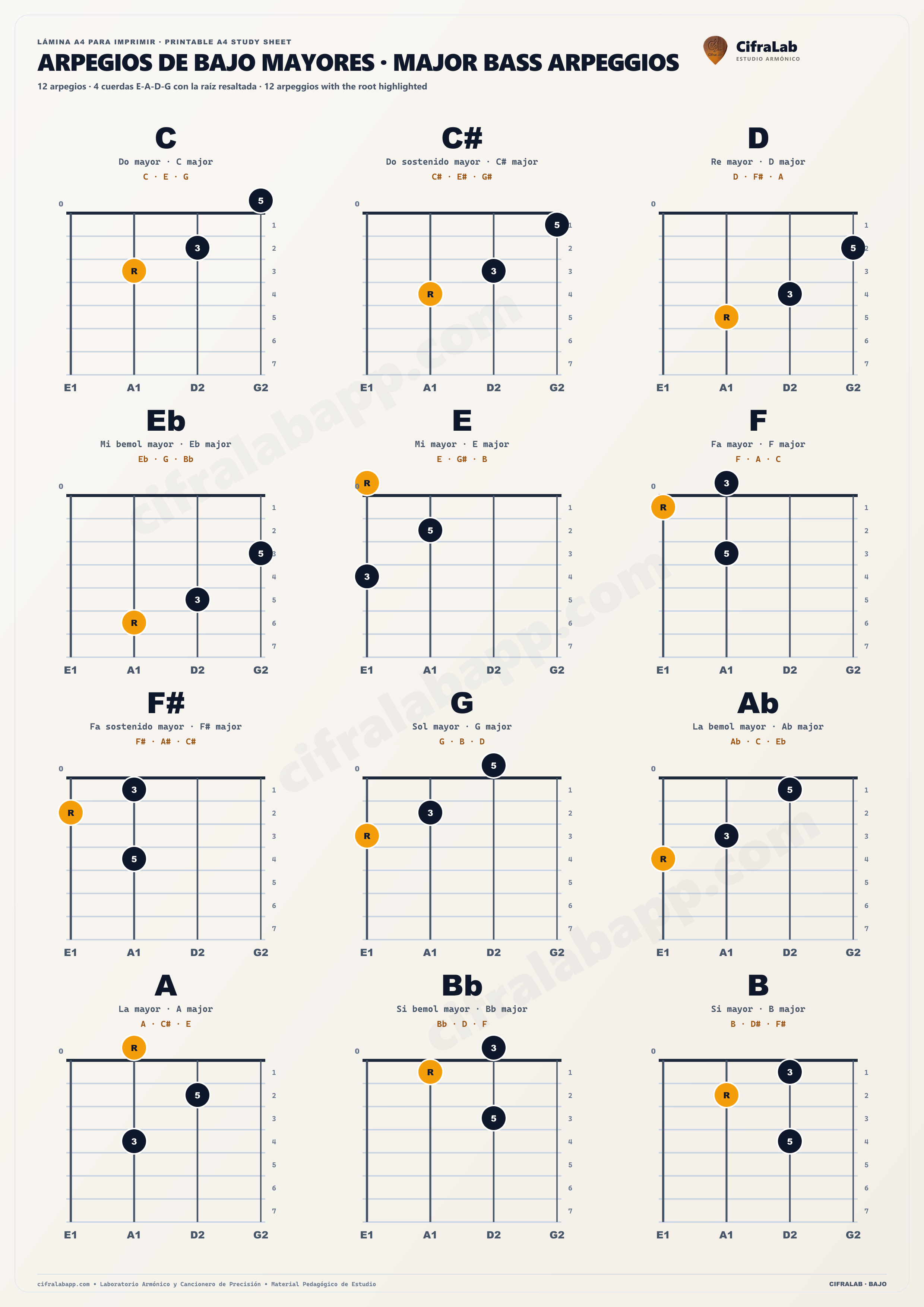
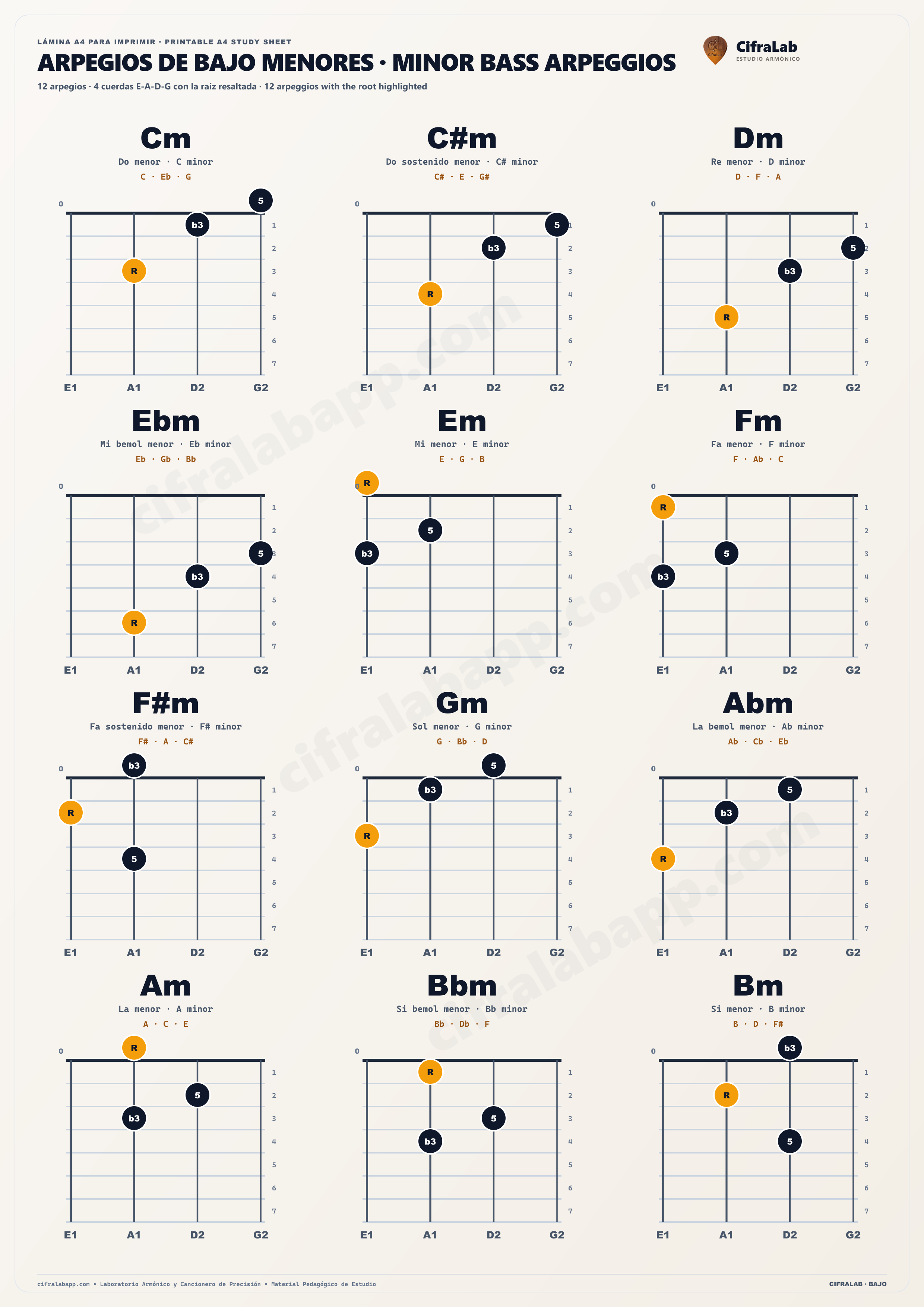
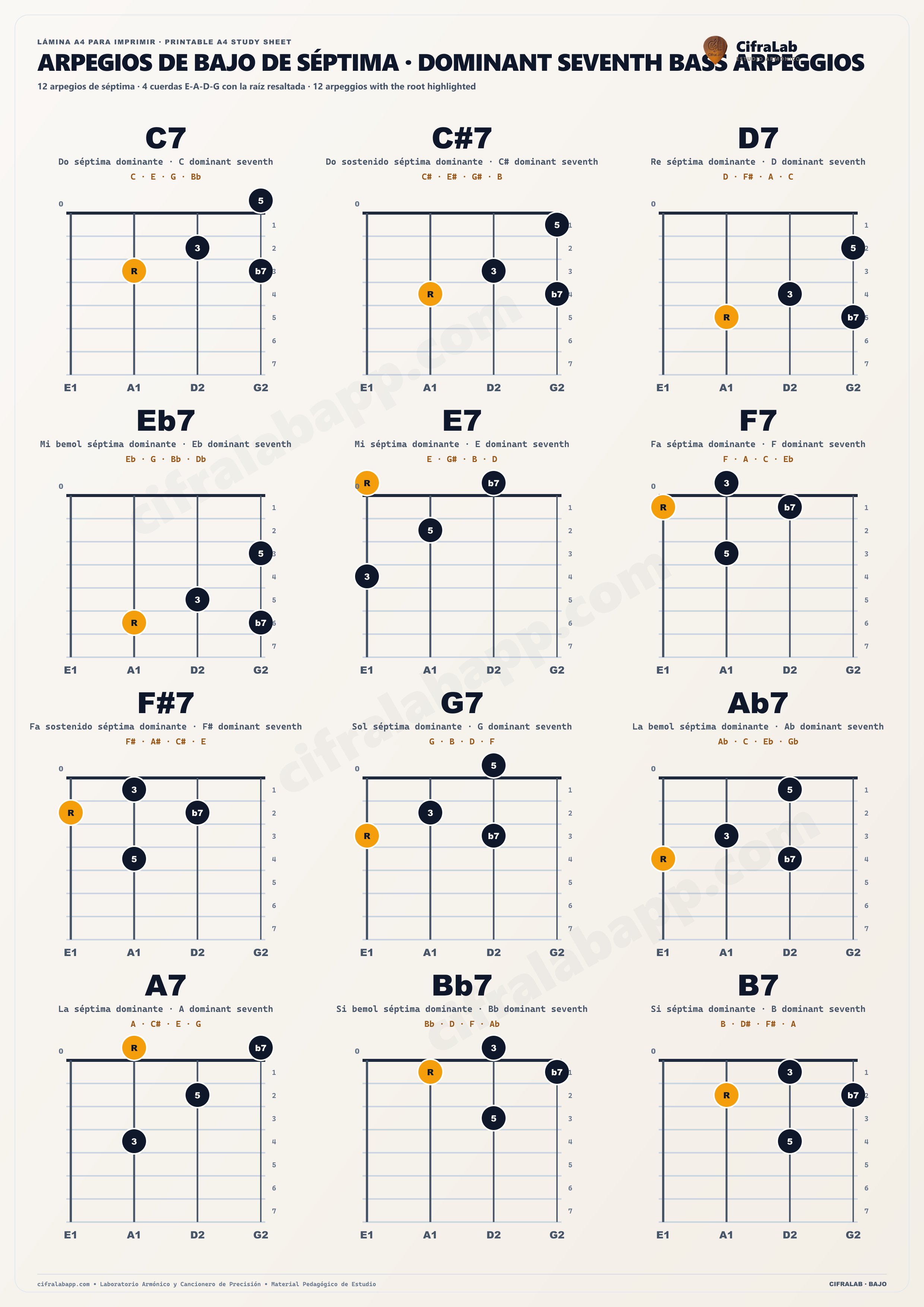
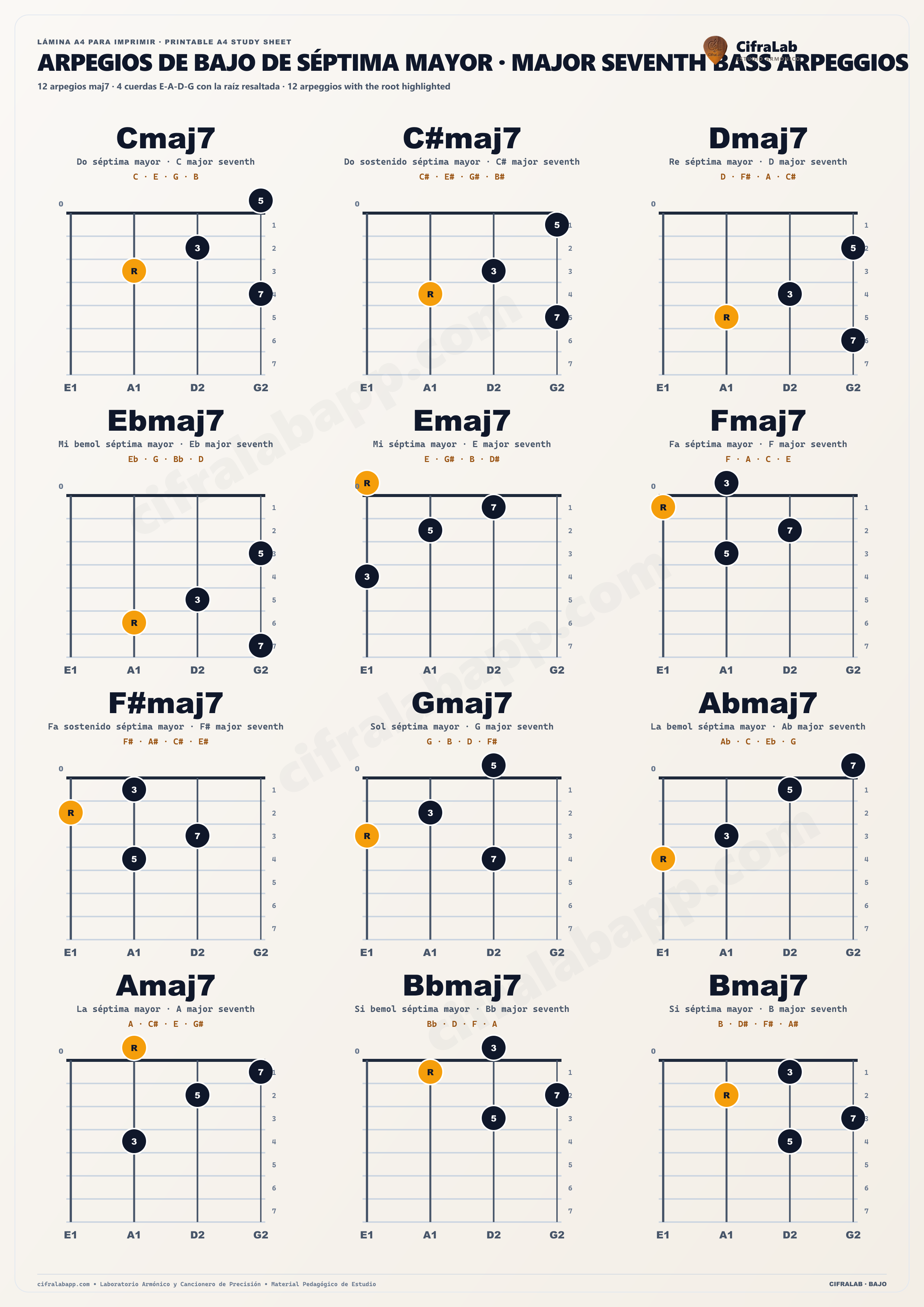
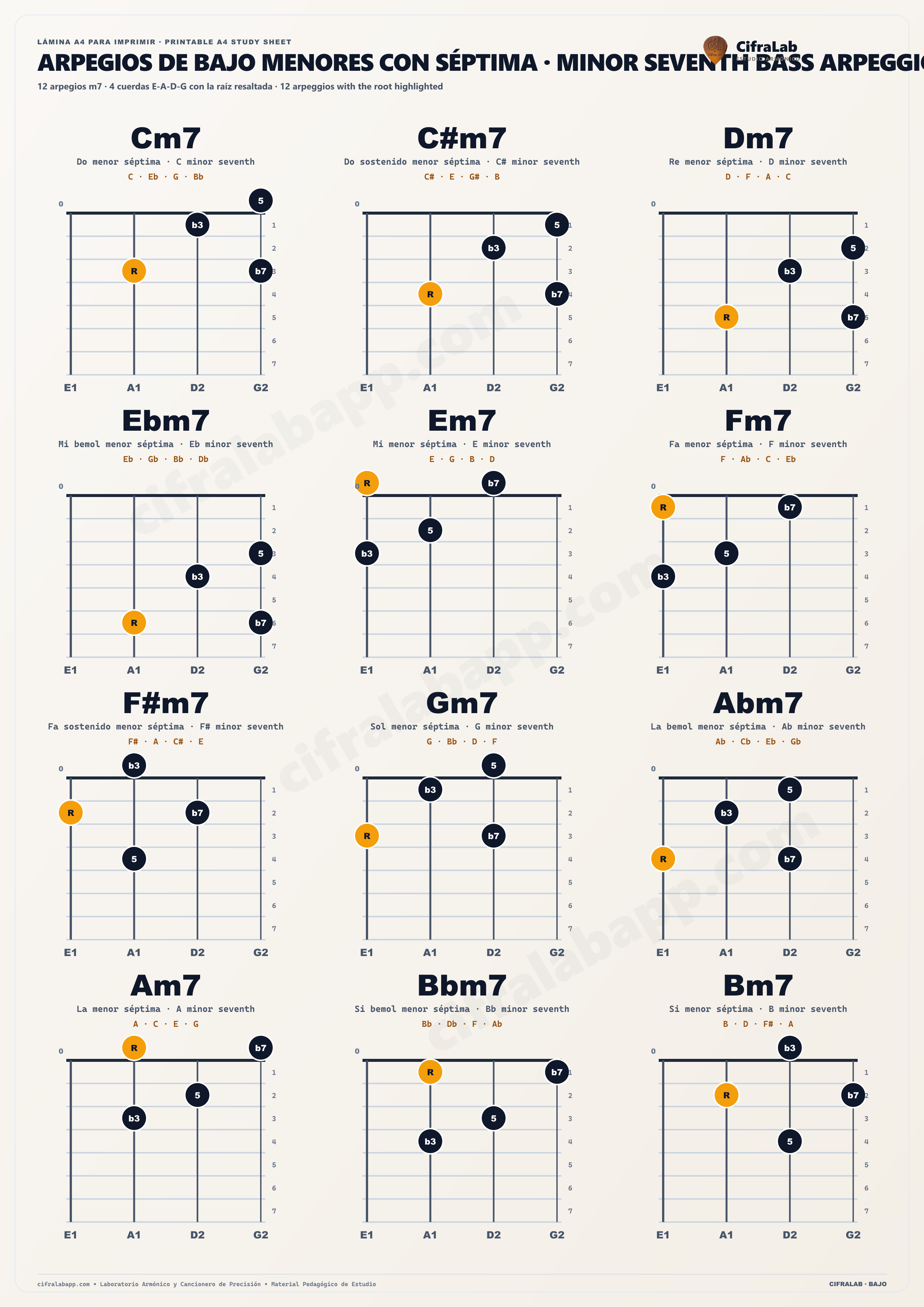
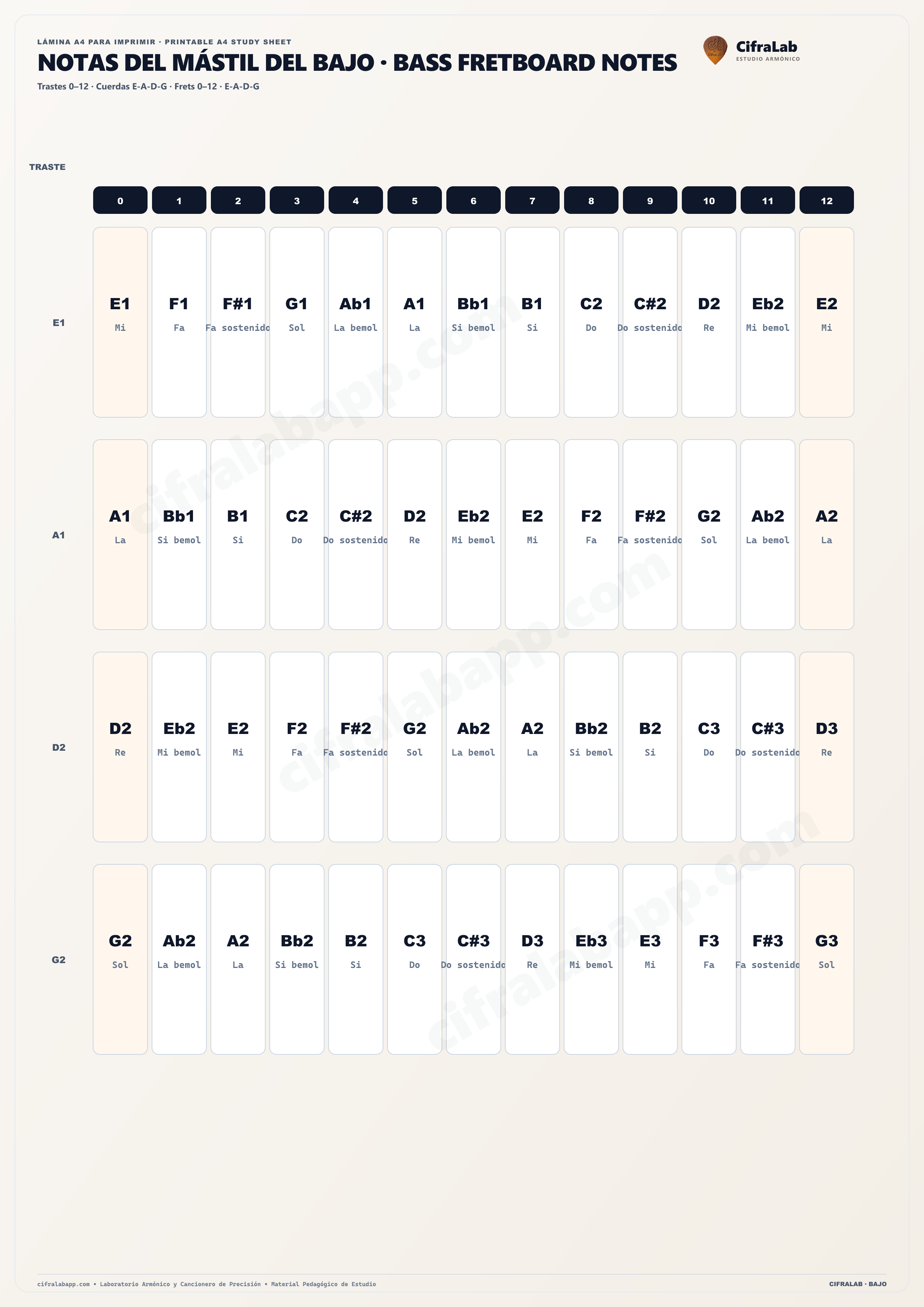
Open a preview or download the PNG for printing. Each arpeggio diagram shows its notes across the four bass strings.
What Each Sheet Includes
There are five arpeggio charts and one note chart. The arpeggios are major, minor, dominant seventh, major seventh, and minor seventh.
The note chart shows the name of each note on the four strings, from the open string up to the 12th fret.
What an arpeggio is on bass
An arpeggio is a chord played note by note. On bass, two notes almost never sound together, so the chord is played this way.
The C major arpeggio has three notes: C, E, and G. The root, C, appears in amber on the chart.
The root is the note you will play the most. The other notes of the arpeggio are used to move from one chord to the next.
How to practice with the charts
- Play the root four times per measure. For example, C, Am, F, and G, one note per beat.
- Then add the fifth: root, fifth, root, fifth.
- Finally, play the complete arpeggio, ascending and descending, at 60 BPM.
- Increase the tempo by 5 BPM increments when you can play the arpeggio without looking at the chart.
How to Print Them
The sheets are A4 size at 300 dots per inch. They look sharp on paper even if you print them in black and white.
The fretboard note chart is the most useful one to have taped to your wall. It helps you find any note without counting frets.