01
Standard
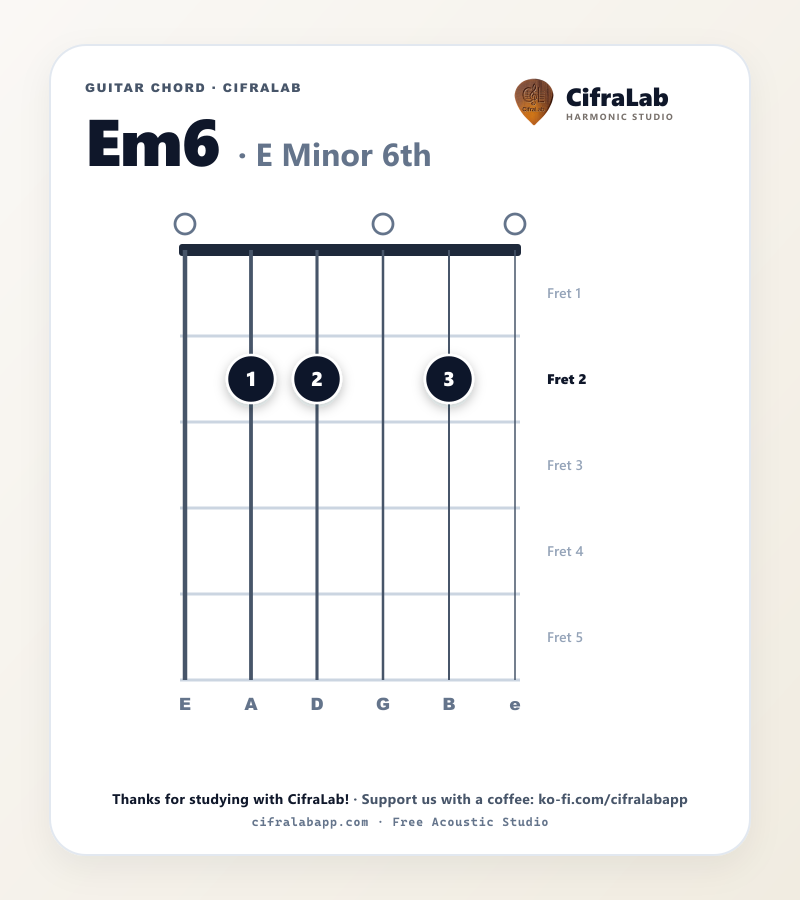
Standard Position6 / 6 stringsRoot: 6th String (Low E)
String Control (Muted & Active):
Root
6th String (Low E)
○Open
EDegree 1
5th String (A)
Fret 2Finger 1
BDegree 5
4th String (D)
Fret 2Finger 2
EDegree 1
3rd String (G)
○Open
GDegree ♭3
2nd String (B)
Fret 2Finger 3
C#Degree 6
1st String (High E)
○Open
EDegree 1
Placement tip: Press: 5th String (A) at fret 2 with your Index finger, 4th String (D) at fret 2 with your Middle finger, 2nd String (B) at fret 2 with your Ring finger. Play open: 6th String (Low E), 3rd String (G), 1st String (High E).